




 :
:

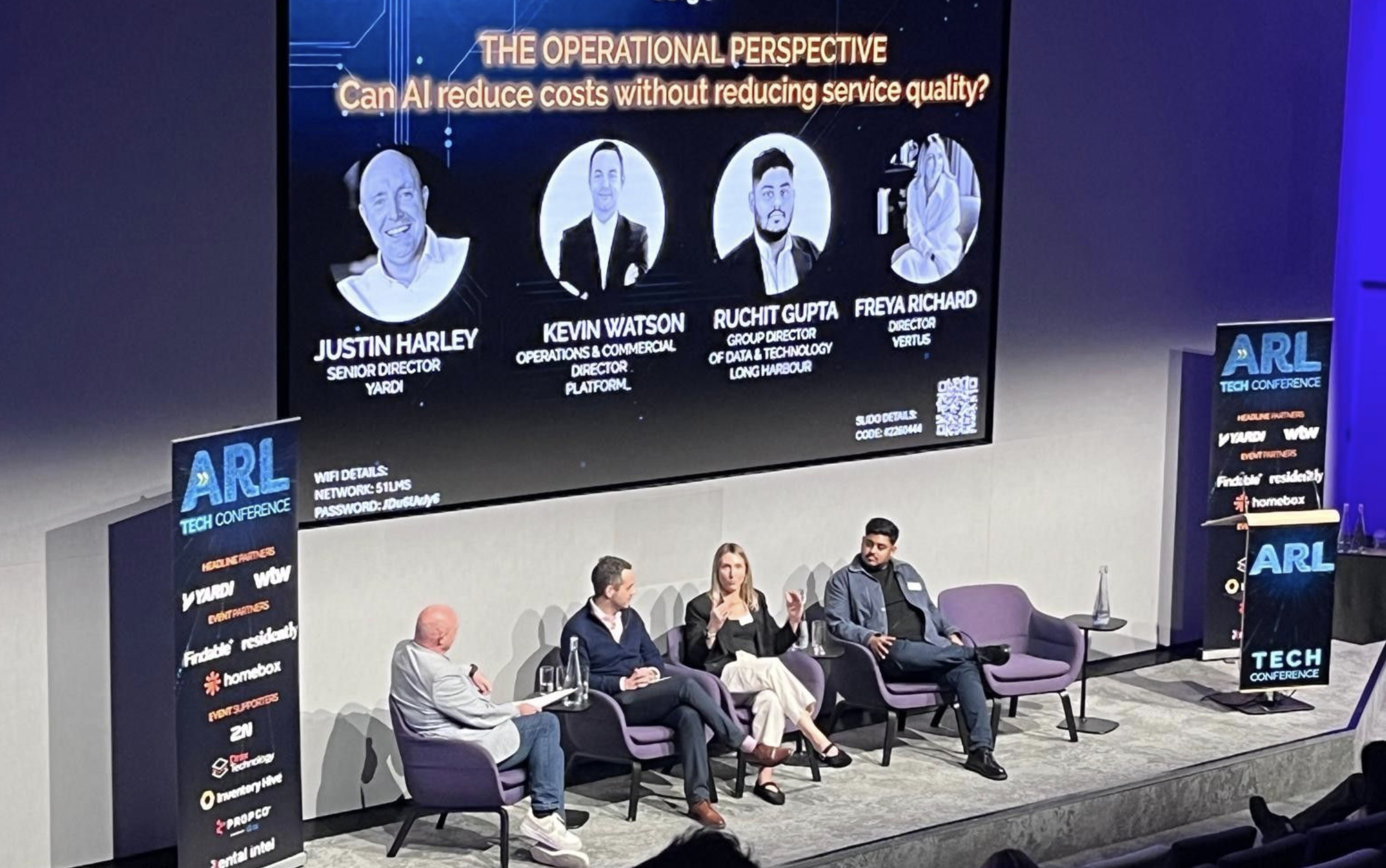
UK: The Association for Rental Living has launched a guide to AI in Build to Rent at its inaugural Rental Living Tech Conference.
The guide acknowledges that AI is already embedded in BTR operations, meaning governance, rather than adoption, is now the critical area of focus.
Brendan Geraghty, CEO of the Association for Rental Living, said: “From repairs triage and chatbots to pricing and analytics, AI is already influencing resident experiences and operational decisions across the rental living sector. We’ve reached an inflection point in 2026. The Renters’ Rights Act and the EU AI Act high-risk provisions, due in August, along with active CMA enforcement, mean that poorly governed AI now carries immediate legal and reputational risk. In contrast, well-governed, responsible AI has become a competitive advantage”
The AI in Build to Rent – Practical Guide acknowledges that governing AI has become far more than just a compliance exercise. Operators that govern AI transparently and fairly will be better positioned with residents, investors and regulators than those that treat AI as an unexamined tech add‑on.
In recognition of this, AI governance now forms part of sector standards, with new digital, data and AI provisions in the BTR Alliance Code of Practice for BTR Operators, launching later this month, embedding AI oversight into mainstream operational, compliance and verification frameworks.
AI is already in use across the rental living sector, with many operators using it was part of their property management, CRM, maintenance and communications software. However, this is often without explicit oversight or board visibility, creating a significant accountability risk.
Geraghty adds: “’The AI did it’ is not a defence and regulators are explicit that legal responsibility for AI decisions sits with the operator, not the vendor or the algorithm. With the rapid growth of agentic AI, where autonomous AI agents undertake multi-step workflows, the risks (as well as the opportunities) notch up.”
The new guide, available to ARL members, makes it clear that proportionate, risk‑based governance is essential. Low‑risk AI use cases (repairs, document intelligence, comms) offer fast, proven returns, but high‑risk AI (screening, affordability checks, arrears scoring, biometrics and pricing) demands enhanced controls, human oversight and formal approval. Without appropriate governance measures in place, the risk of data leakage, consumer law breaches and embedded bias in decision-making amplifies significantly.
Geraghty continues: “Residents must remain at the centre of AI deployment. To ensure this, the new AI in Build to Rent – Practical Guide includes an innovative AI Ladder, offering a four-stage proportionate framework and practical pathway for every operator. It enables organisations of all sizes to progress from basic AI awareness to mature, trusted deployment without over‑engineering and with transparency and explainability at its core.”
ARL members can download AI in Build to Rent – Practical Guide at www.theARL.org.uk
Highlights:
- The Association for Rental Living has launched a guide to AI in Build to Rent at its inaugural Rental Living Tech Conference.
- The guide acknowledges that AI is already embedded in BTR operations, meaning governance, rather than adoption, is now the critical area of focus.
- ARL members can download AI in Build to Rent – Practical Guide at www.theARL.org.uk