



 :
:


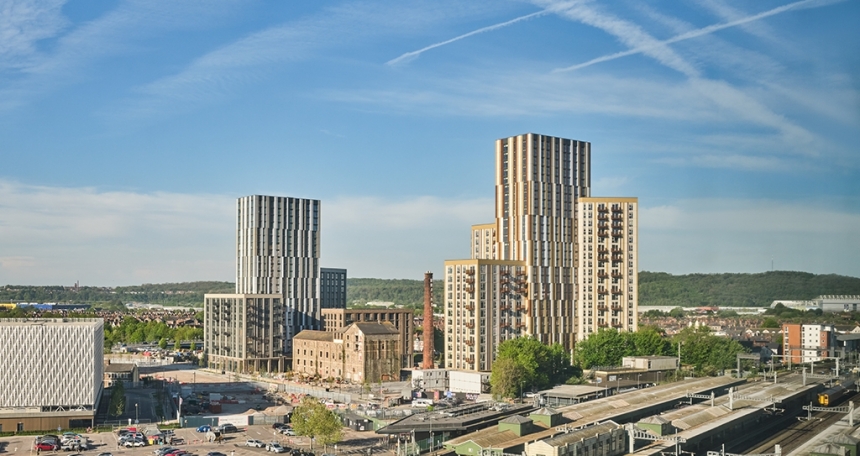
UK: The John Lewis Partnership (JLP) is withdrawing from its build-to-rent (BTR) property business, blaming a “fundamental shift” in the economic conditions that underpinned the venture when it launched in 2020.
The UK’s largest employee-owned business, which runs John Lewis department stores and the upmarket Waitrose supermarket chain, said the move is part of a broader strategic decision to refocus on its core retail brands under executive chair Jason Tarry.
The partnership’s move into BTR was part of former chair Sharon White’s strategy to diversify. She set a since-abandoned target to generate 40 per cent of the partnership’s revenue from outside retail.
A JLP spokesperson said: “Our rental property ambition was based on a very different financial environment: one with more stable investment returns, lower borrowing costs and more affordable costs to build homes. Unfortunately, the current climate – higher interest rates, inflationary pressures and a more cautious property market – has meant the model no longer meets the Partnership’s investment criteria.”
“Since we embarked on the rental property plans in 2020, we have made significant progress with our core retail strategy. This has seen us invest heavily in our customer offer for our unique brands John Lewis and Waitrose, simplifying our business and strengthening our balance sheet. The strategy is progressing well and involves modernising our stores, enhancing our digital platforms and improving our supply chain to provide the best possible quality, service and value to our customers. We remain committed land owners in our communities and continue to invest significantly in our property assets and retail offer. We’re proud of what we’ve achieved in terms of progress with three planning applications and managing third party BTR homes for residents to a high standard. We will fulfil our existing management contracts at four BTR sites as part of a responsible transition out of the business,” they added.
Katherine Russell, director of BTR at JLP, said: “The Partnership decision to exit BTR has not been easy, particularly given the passion and progress behind it. I remain incredibly proud of what have we achieved together, demonstrating the impact that can be made through the Partnerships unique culture and values. I also recognise the impact this will have on the BTR sector, this news should not undermine all the amazing people working to improve renting. There is still a wall of capital out there wanting to build rental housing of all shapes and sizes.”
“Like everyone else, we faced a complex environment, but identified over 50 potential sites, secured three planning consents delivering c.1,000 homes, and built a nationwide operating platform from the ground up. What makes me especially proud is proving beyond doubt, the link between great service and NOI. We increased resident satisfaction from –2 to +40. That uplift in experience translated into stronger retention, operational discipline and ultimately service generated NOI growth of 15 per cent. We scaled to 1,000 homes while proving that customer experience and financial performance are not competing priorities…they reinforce each other. At the heart of all of this was an exceptional team. They built the platform, shaped the culture and delivered for residents every single day. Through uncertainty and pressure, they showed resilience, professionalism and genuine care not just for the business, but for one another. They challenged constructively, supported relentlessly and never compromised on standards. What they created together stands as a testament to their capability and character,” she added.
Brendan Geraghty, CEO of the Association for Rental Living (ARL), responded to the announcement, saying: “The withdrawal of the John Lewis Partnership (JLP) from its Build to Rent property business as announced today is deeply disappointing news and a real loss for consumers. As valued members of the Association for Rental Living, JLP brought something genuinely different to the rental living sector – a trusted consumer brand, a service-first culture and a long-term commitment to quality that institutional investors and residents alike responded to. The operational improvements they delivered across their managed portfolio speak for themselves. The fact they were able to build a fully-operational business in under 18 months speaks volumes about the leadership of Katherine Russell and about the determination of the Partnership.”
“Whatever people will say, the Partnership did not fail. It was ambitious, it was credible and it was doing the right thing. What has made this venture unworkable is a set of conditions entirely outside its control: borrowing costs that have roughly doubled since 2021, construction cost inflation that continues to outstrip general prices, an unwieldy planning system that has added years to delivery timescales, and the introduction of legislation – the BSA and particularly the Renters’ Rights Act – that has made it materially harder for investors to underwrite the predictable income growth that rental housing requires. Through own engagement in bringing together the Building Safety Regulator and institutional investors, we know that BTR investors support the principle that a safe building is a sound investment however the teething problems of the BSR have negatively impacted investor sentiment and contributed to JLP’s challenges. When a brand as well-known and well-resourced as John Lewis concludes that the economics no longer work, ministers need to sit up and think very carefully about how they respond. The UK needs institutional investment in high-quality rental homes – it is not a nice-to-have, it is essential to meeting the government’s own housing targets. This money is still very much there. But if the policy environment continues to deter exactly the kind of long-term, service-driven capital that JLP represents, we will miss a generational opportunity to deliver the homes this country so desperately needs,” he added.
Highlights:
- The John Lewis Partnership (JLP) is withdrawing from its build-to-rent (BTR) property business, blaming a “fundamental shift” in the economic conditions that underpinned the venture when it launched in 2020.
- The partnership’s move into BTR was part of former chair Sharon White’s strategy to diversify
- She set a since-abandoned target to generate 40 per cent of the partnership’s revenue from outside retail
- The decision has been attributed to “a very different financial environment” from the the one when the BTR business was launched in 2020