



 :
:

Exclusive: New research from Ed Howe, head of operational living research at Bidwells, gives a detailed picture of the energy performance of the UK’s operational mutifamily stock.
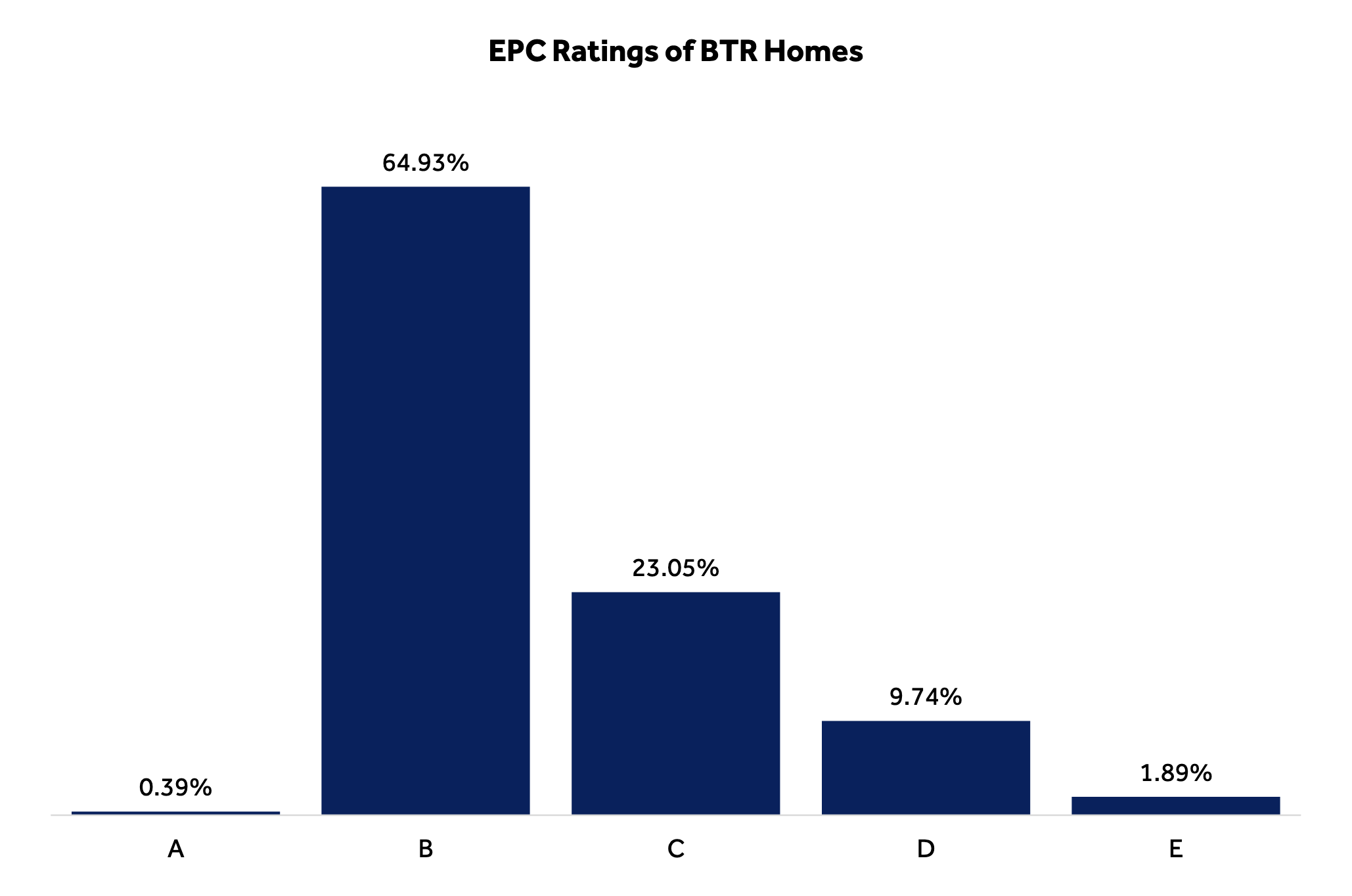
The first chart shows the total figures from all the cities and geographies analysed for the study. Overall, 2,586 lines of data were assessed to produce this chart, giving a reasonably large sample size to represent multi-family BTR. In total, more than 88 per cent of all multifamily BTR homes are Energy Performance Certificate (EPC) C or above, evidencing the sector as one with good sustainability and ESG credentials. BTR homes, due to their mostly new-build nature, are well-built and well-insulated, which leads to a good EPC score. For context, as of late 2025, the median EPC rating for housing in England is Band C, and in Wales it is Band D, with overall efficiency improving over time. While new-builds typically achieve B ratings, the majority of existing, older homes remain within the D band.
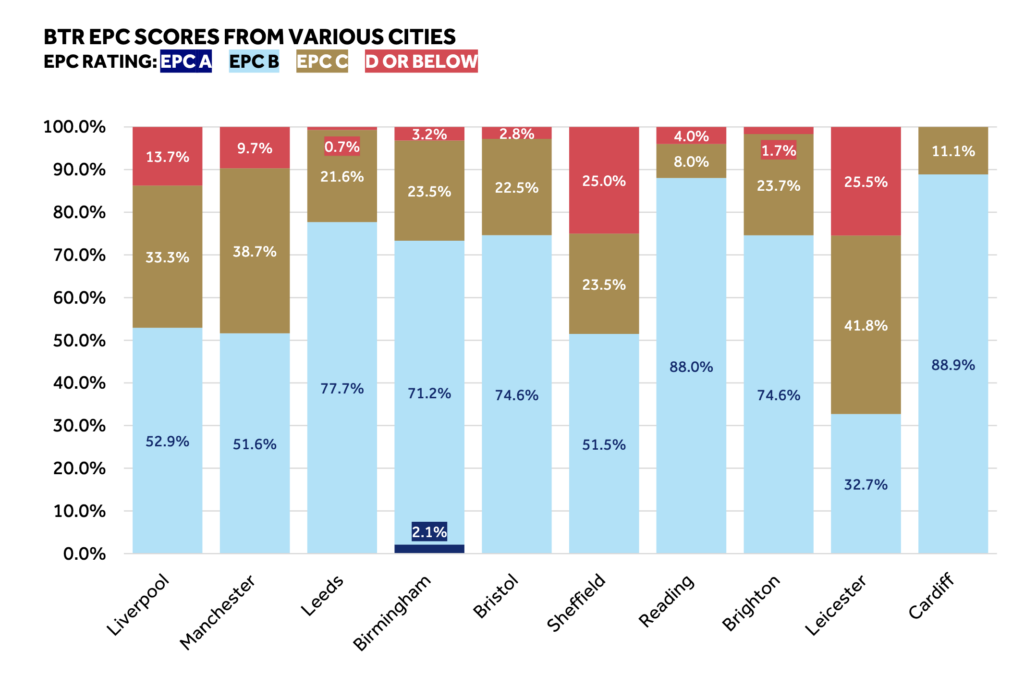
The second chart compares BTR’s EPC ratings across the ten largest cities outside London. Sheffield and Leicester have the highest proportion of EPC ratings at D or below. This is due to these two cities having BTR schemes that are in converted old buildings – such as mills and warehouses. While these buildings boast a great deal of character, they come with a lower EPC rating. The cities with the highest proportion of BTR homes at a B rating are Cardiff and Reading. Birmingham is the only city that has some apartments at EPC A, a rare score.
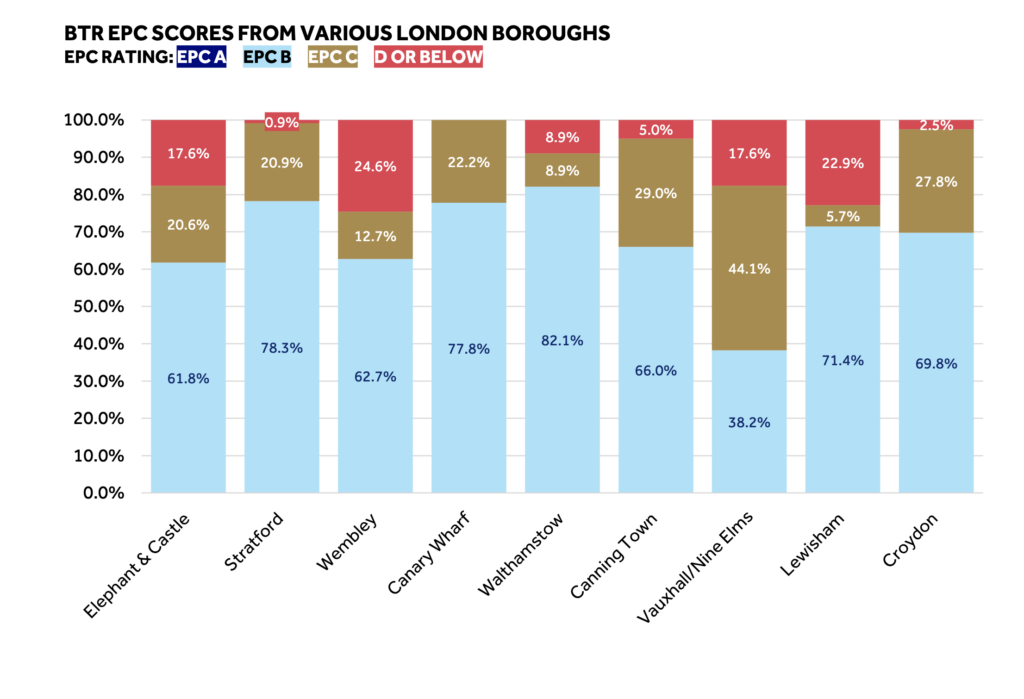
The third chart compares EPC ratings at assets found in different BTR hubs throughout London, including Stratford, Wembley, and Croydon. Wembley and Lewisham have the highest proportion of EPC ratings at D or below, while Walthamstow, Stratford, and Canary Wharf are the areas with the highest proportion of EPC scores at B or above.